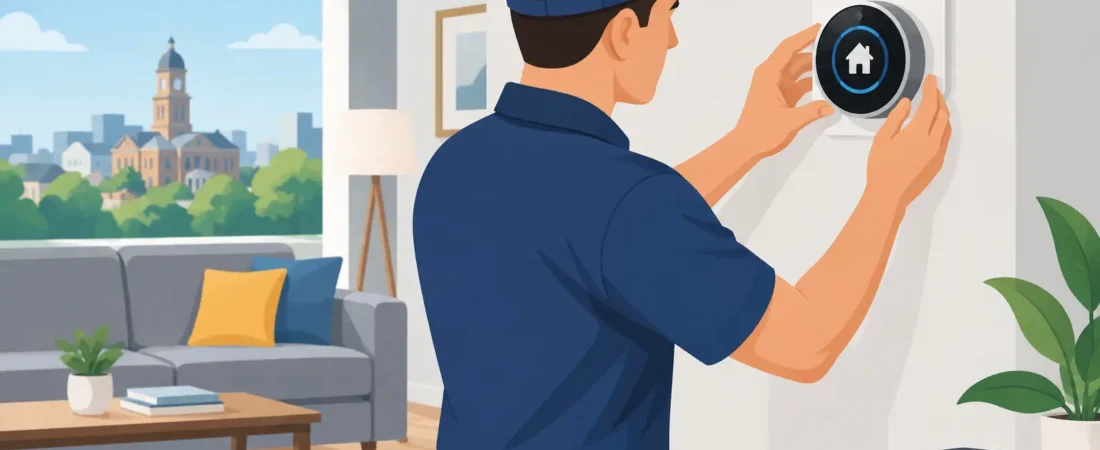
A thermostat is a small wall control with a big job. If it is wired or configured incorrectly, your furnace may short-cycle, your air conditioner may not start, or a heat pump may run on costly backup heat when it does not need to. For thermostat installation Ypsilanti homeowners can rely on, the first question is not which screen looks best. It is whether the new control works correctly with the equipment already in the home.
A replacement can make daily comfort easier and help you manage energy use. But the right choice depends on your HVAC system, available wiring, household routine, and how much control you actually want. A clear scope up front prevents the common surprise of buying a thermostat that cannot use all of its advertised features.
When a Thermostat Replacement Makes Sense
A thermostat does not have to be completely dead to be worth replacing. Inconsistent temperatures, a display that goes blank, buttons that no longer respond, or a system that starts and stops at odd times can all point to a failing thermostat. Before replacing it, though, a technician should rule out other causes such as a tripped breaker, weak batteries, a clogged furnace filter, a drain safety switch, or an HVAC equipment issue.
Replacement also makes sense when an older programmable model is difficult to use. Many homeowners leave complicated schedules disabled because changing them feels like more work than it is worth. A modern thermostat with simple controls may be a better fit, even if you do not need a full smart-home setup.
For landlords and property managers, a dependable thermostat can reduce service calls tied to tenant confusion, dead batteries, or accidental schedule changes. In rentals, the best model is often not the most feature-heavy one. It is the model that is compatible, durable, easy to understand, and appropriate for the property.
Choosing the Right Thermostat for Your System
The label on the box is only part of the decision. Forced-air furnaces, central air conditioners, boilers, multi-stage systems, and heat pumps all have different control needs. A thermostat that works well with a basic gas furnace may not be suitable for a heat pump with auxiliary heat or a two-stage cooling system.
Basic programmable models
A basic programmable thermostat is often a practical choice for homes with conventional heating and cooling. It lets you set temperatures around work, school, sleep, and weekends without relying on an app or Wi-Fi connection. This can be a sensible option for homeowners who want better scheduling without another connected device to manage.
The trade-off is flexibility. If your weekly schedule changes often, you may end up overriding the program frequently. In that case, a simpler non-programmable unit or a smart thermostat may be more useful.
Smart thermostats
Smart thermostats can allow app control, automatic scheduling, maintenance reminders, and energy-use reports. They are helpful for people who travel, manage a second property, or want to adjust settings before arriving home. They can also be convenient for some small offices and retail spaces, where managers need to monitor comfort outside business hours.
Those benefits depend on proper setup. Wi-Fi reliability, user permissions, account access, and equipment compatibility all matter. A smart model may require a common wire, usually called a C-wire, for steady power. Some models include adapters or workarounds, but those are not a substitute for checking the system carefully.
Heat pump and multi-stage controls
This is where installation details matter most. A heat pump thermostat needs to be set for the correct system type, reversing valve operation, number of stages, and auxiliary or emergency heat settings. One incorrect configuration can affect comfort and operating cost.
If your home has a heat pump, variable-speed equipment, zoning, or more than one thermostat, do not assume a standard replacement will be a drop-in swap. The work may be straightforward, but it needs a complete compatibility check before installation begins.
What a Proper Thermostat Installation Includes
A good installation is more than removing the old unit and matching colored wires. Wire colors are not always consistent, especially in older homes or after past repairs. The installer should identify the terminals in use, check the equipment configuration, and turn off power before making connections.
Once the new thermostat is mounted and wired, the system should be tested in heating and cooling modes when weather and equipment conditions allow. On a heat pump, that includes confirming the correct changeover and backup heat operation. The thermostat should also be programmed with the correct time, preferences, and schedule if you want one.
The last step is the one homeowners should not have to skip: a clear explanation of the controls. You should know how to change the temperature, switch between heat and cool, replace batteries if applicable, use temporary holds, and recognize when a message on the screen calls for service rather than a quick reset.
Common Problems That Are Not Really Thermostat Problems
A new thermostat cannot fix every comfort issue. If some rooms are too warm while others are too cold, the problem may involve airflow, ductwork, insulation, blocked vents, or an undersized system. If the furnace runs but produces no heat, the cause may be an ignition, gas, condensate, or safety-control issue.
Likewise, repeated cycling can come from a dirty filter, a restricted return-air path, a refrigerant concern, or equipment that is too large for the space. Replacing the wall control without diagnosing these issues can create frustration and unnecessary cost.
That is why a useful estimate separates thermostat work from HVAC diagnostics when needed. You approve the plan before work starts, and you can decide whether a simple replacement is the right next step or whether the system needs a closer look.
What Affects the Cost of Installation?
The price is not only about the thermostat itself. A standard swap on a conventional system with usable wiring is usually simpler than installing a smart thermostat that needs new wiring, an adapter, or configuration for multi-stage equipment. Wall repair, relocating the thermostat, or correcting problems from a previous installation can also change the scope.
For a property manager, the number of units and access coordination may matter just as much as the hardware. For a homeowner, the key decision is often whether paying more for smart features will genuinely improve how the household uses heating and cooling.
Ask for a written estimate that states what is included: the thermostat model if it is being supplied, installation labor, compatibility review, testing, setup, and any potential add-on work that may be found. Clear scope language matters. It gives you a chance to compare options without guessing what is covered.
Preparing for Thermostat Installation in Ypsilanti
A little preparation keeps the appointment focused. Take a photo of your current thermostat and, if accessible, the wiring behind it before buying a replacement. Note whether your home has a furnace and central air, a boiler, or a heat pump. If you have noticed specific issues, such as the system only running in one mode or a display going blank at certain times, write those down.
If you rent, check with the owner or manager before changing the control. The thermostat may be part of a broader equipment warranty, utility program, or maintenance plan. Commercial tenants should also confirm who is responsible for the HVAC controls before authorizing work.
Local homes vary widely, from older properties with limited thermostat wiring to newer homes with connected equipment. A local team familiar with routine property maintenance can help coordinate the right next step instead of treating the thermostat as an isolated problem. Sahel Home Services works from a written scope so customers know what is being installed, tested, and completed.
A thermostat should make your space easier to live or work in, not create another troubleshooting project. Choose the control that fits your equipment and routine, ask for the installation details in writing, and make sure the system is tested before the job is considered done.