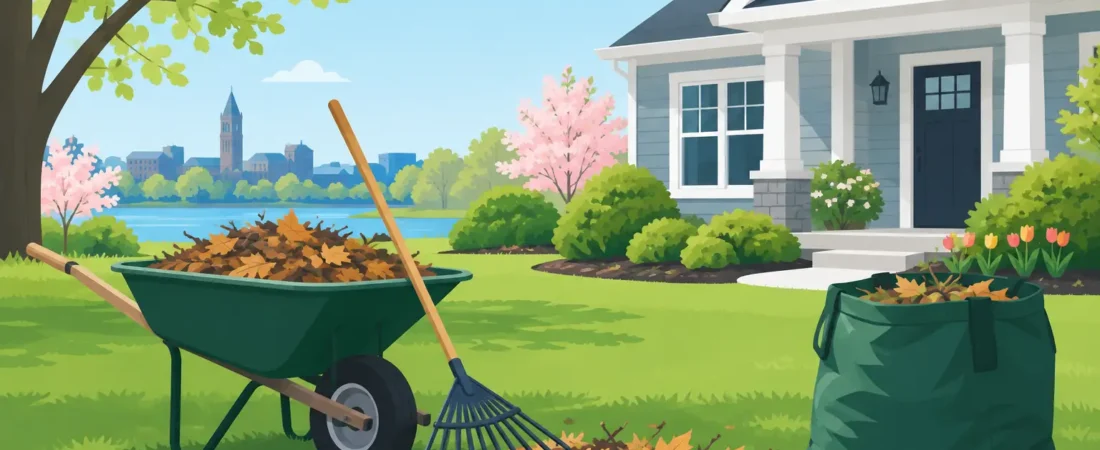
Winter leaves a visible record behind: branches at the curb line, packed leaves in shrub beds, salt-stained edges near the driveway, and turf that looks thinner than it did last fall. A proper spring yard cleanup Ypsilanti property owners schedule early can reset those areas before spring growth makes the work harder and more expensive.
For homeowners, rental owners, and small businesses, the goal is not simply to make the property look better for a weekend. It is to clear conditions that can hold moisture, smother grass, block drainage, and make routine mowing difficult. The right scope depends on the property, but the work should be clear before anyone arrives. You approve the plan before work starts.
What Spring Yard Cleanup in Ypsilanti Should Include
A spring cleanup usually starts with a full walk-through of the lawn, landscape beds, entry areas, and fence lines. Winter weather moves debris into places that are easy to miss, especially along foundations, under hedges, around outdoor equipment, and near drainage paths.
The basic work often includes collecting fallen branches, leaves, litter, and winter-blown debris. It may also include cutting back dead perennial growth, clearing landscape beds, picking up pet waste, and removing material that has gathered around downspouts or window wells. A clean edge along walkways and driveways can make a major difference in how the property looks, but it also helps keep loose debris out of the lawn.
Not every property needs every task. A small, regularly maintained yard may only need debris removal and a first mow. A rental that sat vacant through the winter may need bed cleanup, overgrowth removal, shrub trimming, and a more detailed exterior reset before a move-in. Commercial properties may need attention around entrances, parking areas, signage, and high-visibility landscaping.
Written scopes matter here. “Spring cleanup” can mean very different things from one provider to another. Before approving work, confirm what will be removed, what will be left in place, whether hauling is included, and whether mowing or trimming is part of the visit.
Start With Debris, Drainage, and Safety
The first priority is usually removing what winter left behind. Branches can damage mower blades and become tripping hazards. Thick leaf piles can hold moisture against turf and garden beds, slowing dry-out and encouraging patchy lawn conditions. Debris at the base of shrubs can also hide damage from rabbits, voles, or winter salt.
Drainage deserves attention before the spring rain pattern picks up. Check that downspout outlets are clear and pointed away from the foundation. Clear leaves from low spots, swales, and drain covers so water has somewhere to go. If a part of the yard stays saturated for days, cleanup alone will not solve the problem, but it can reveal whether the issue is clogged runoff, compacted soil, a grading concern, or a damaged downspout extension.
Use caution around anything that could be hazardous. Broken glass, exposed metal, animal waste, damaged fencing, and loose exterior fixtures should be identified before raking or mowing begins. If a cleanup reveals a repair need, it is usually easier to address it while the area is already cleared and accessible.
Prepare the Lawn Without Rushing It
The temptation after a long Michigan winter is to mow as soon as the grass looks green. That can backfire if the lawn is still wet and soft. Mowing saturated turf can leave ruts, compact the soil, and tear grass instead of cutting it cleanly.
Wait until the ground is firm enough to walk on without sinking or leaving deep prints. Then remove sticks and heavy leaf cover before the first mow. A first cut should be measured, not aggressive. Taking too much off at once can stress turf that is still recovering from snow cover, freezing temperatures, and possible salt exposure.
Spring is also a good time to inspect lawn edges. Salt and snow piles can leave brown areas along sidewalks and driveways. Some spots will improve as temperatures stabilize, while others may need reseeding, soil work, or changes to how snow and de-icing materials are managed next winter. There is no one fix for every thin area. The cause matters.
If you plan recurring mowing, getting the yard cleared before the first scheduled service helps the season start on the right footing. A mower crew can maintain growth more efficiently when branches, hidden debris, and overgrown bed edges are not in the way.
Reset Beds and Shrubs With a Light Hand
Landscape beds often look worse in early spring than they really are. Old leaves and winter debris can cover emerging perennials, and many shrubs show brown tips or broken stems after freeze-thaw cycles. Cleanup should make room for new growth without removing plants that are merely slow to wake up.
Dead perennial material can generally be cut back once new growth is visible or temperatures have settled. With shrubs, remove clearly broken, dead, or crossing branches first. Avoid heavy pruning simply because a shrub looks untidy in March or April. Some flowering plants set buds on old wood, and cutting at the wrong time can reduce the season’s blooms.
Mulch is another area where more is not always better. If existing mulch is compacted, washed out, or mixed with leaves, bed cleanup may include raking it into a more even layer or replacing it where needed. But piling fresh mulch against tree trunks, siding, or shrub stems can trap moisture and create avoidable problems. Keep a clear ring around trunks and plant bases.
Know When Cleanup Becomes a Larger Property Project
A standard cleanup can handle seasonal debris and routine yard resetting. It may not be enough when there are fallen limbs, invasive growth, drainage failures, damaged retaining borders, or major storm damage. Those items need to be called out separately so the work is priced and planned correctly.
The same applies to exterior repairs discovered during cleanup. A loose gate, damaged step, peeling porch paint, clogged gutter area, or broken outdoor light may be unrelated to yard work, but they affect how the property functions and presents. Coordinating related work can save time, particularly for landlords preparing a turnover or businesses getting ready for a busy spring season.
Sahel Home Services can coordinate seasonal yard work alongside the cleaning, repair, and maintenance tasks that often surface during a property reset. One accountable local team is helpful when the goal is to get several practical items handled without managing a separate vendor for each one.
A Clear Scope Prevents Cleanup Surprises
Before scheduling, take a few photos of the yard and note your priorities. For example, you may care most about getting branches removed before mowing, cleaning beds before listing a rental, or improving curb appeal before customers arrive. Those priorities help establish the right order of work.
Ask whether the estimate covers hauling and disposal, how overgrowth or large limbs will be handled, and whether work is priced as a one-time visit or part of a recurring lawn plan. If the crew finds something outside the approved scope, the next step should be a clear conversation, not an unexpected charge at the end.
A spring yard cleanup is one of the simplest ways to make a property feel cared for again. Start before grass and weeds get ahead of you, choose a scope that matches the condition of the yard, and leave room in the plan for the repairs or maintenance needs the cleanup may uncover.