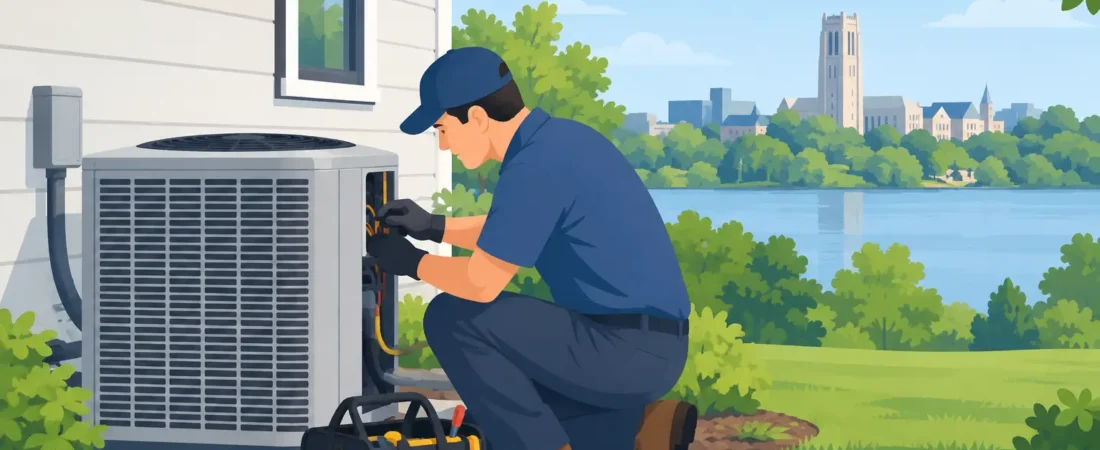
A furnace that starts making noise on the first cold night or an air conditioner that quits during a humid July week creates the same problem: an urgent call, less choice, and a repair you did not plan for. An HVAC tune up Ann Arbor homeowners schedule before peak season is a practical way to catch wear, airflow restrictions, and performance concerns while there is still time to make a clear decision.
A tune-up is not a promise that a system will never fail. Mechanical equipment can develop a problem without much warning, especially as it ages. What routine service does provide is a documented look at the system’s condition, safer operation checks, and a chance to address small concerns before the heating or cooling system is under its greatest demand.
What an HVAC Tune Up in Ann Arbor Should Include
The useful part of a tune-up is not a vague statement that the unit was “checked.” You should know what was inspected, what was cleaned or adjusted, and whether the technician found an issue that needs a separate repair estimate.
For a furnace or other heating system, a seasonal visit commonly includes an inspection of the air filter, blower components, electrical connections, thermostat operation, ignition sequence, and visible venting or drainage components. The technician may check temperature rise, listen for unusual operation, and inspect accessible safety controls. For gas-fired equipment, proper combustion and carbon monoxide-related safety checks matter. If a concern is found, the system may need further diagnostic work or a repair before it should continue operating.
For central air conditioning, the visit commonly focuses on refrigerant-related performance indicators, condenser condition, electrical components, condensate drainage, blower airflow, thermostat response, and the outdoor unit’s clearances. A clogged drain line, dirty filter, damaged contactor, or debris around the outdoor unit can affect comfort and efficiency. Some fixes are straightforward; others require a repair recommendation and approval.
Heat pumps deserve attention in both seasons because they provide heating and cooling. Depending on the equipment, the technician may also review defrost operation, auxiliary heat performance, and the reversing valve’s operation. The right schedule depends on the system’s age, use, and manufacturer guidance, but many heat pump owners benefit from service before both the cooling and heating seasons.
A good provider separates maintenance from repairs. The tune-up should have a defined scope. If a worn capacitor, failing motor, refrigerant leak, or unsafe condition is discovered, you should receive an explanation of the finding and a written estimate before additional work begins. You approve the plan before work starts.
When to Schedule Service
In southeast Michigan, spring and early fall are usually the easiest times to schedule preventive HVAC service. Spring service prepares the cooling side before hot, humid weather arrives. Fall service gives the heating system attention before the first sustained cold stretch.
Scheduling early has a practical advantage: if service identifies a part that needs replacement or a larger repair, you can consider the options without making the decision in the middle of a weather emergency. It can also be easier to schedule around a tenant turnover, planned renovation, or business hours.
There are exceptions. A system that is making loud noises, short-cycling, producing unusual odors, leaking water, blowing weak airflow, or failing to hold the thermostat setting should not wait for the next seasonal appointment. Those signs may call for diagnostics rather than a standard tune-up. If you smell gas, see soot around gas equipment, or a carbon monoxide alarm sounds, leave the area and follow the appropriate emergency safety guidance before arranging service.
The Small Issues That Change Comfort and Cost
Many comfort complaints are not caused by a complete system failure. Restricted airflow is one of the most common examples. A dirty filter can make the blower work harder and leave rooms unevenly heated or cooled. A blocked return vent, crushed duct section, or closed supply register can create a similar result.
Filters are simple, but the right replacement schedule varies. Homes with pets, frequent dust, construction work, or high system use may need more frequent checks. The filter should be the correct size and installed in the proper direction. A very high-efficiency filter is not always the right choice for every system if it restricts airflow beyond what the equipment is designed to handle.
Outdoor equipment also needs space to operate. Leaves, grass clippings, mulch, and stored items around an air conditioner or heat pump can restrict airflow. Keep the area clear, but avoid bending coil fins or spraying electrical components. A maintenance visit is a good time to ask what homeowner tasks are appropriate for your particular equipment.
Thermostat settings matter, too. Large temperature setbacks and rapid changes can make a home feel inconsistent, though the best schedule depends on the equipment and how the home is used. A programmable or smart thermostat can help some households manage schedules, but it will not correct a failing blower, leaky ductwork, or an undersized system.
Tune-Up, Repair, or Replacement: How to Decide
A tune-up is preventive maintenance. A repair addresses a confirmed fault. Replacement is a larger investment that may make sense when repairs become frequent, efficiency is poor, parts are difficult to source, or the equipment is approaching the end of its expected service life.
The right choice depends on more than the system’s age. A newer system with a single failed part may be a sensible repair. An older system with repeated breakdowns, uneven comfort, and a major component failure deserves a more careful cost comparison. Ask for the specific issue, the repair scope, the parts involved, and whether the recommendation affects safety, reliability, or efficiency.
For rental properties, a documented seasonal service visit can make maintenance planning easier between leases. It also gives landlords and property managers a clearer record when a tenant reports that the heat or air conditioning is not working as expected. For small businesses, scheduling service outside customer-facing hours may help reduce disruption, especially when the system serves an office, retail space, or shared workspace.
What to Ask Before You Book
A clear service process saves time for everyone. Before booking, ask whether the visit is a tune-up, a diagnostic call, or both. Describe the equipment type, the issue you have noticed, and whether the system is currently running. If the provider advertises a starting price, confirm what is included and what circumstances could require a separate estimate.
It is also reasonable to ask how findings will be documented, whether repairs require approval before work proceeds, and whether the company is insured. For property managers, confirm access arrangements, tenant communication expectations, and whether invoices can identify the unit or property address.
Sahel Home Services approaches routine property work with the same standard: a defined scope, clear communication, and one accountable local team. That matters when HVAC service is only one part of a larger property to-do list that may also include cleaning, repairs, seasonal exterior work, or turnover preparation.
A Simple Seasonal Routine for Property Owners
An HVAC tune-up works best alongside a few basic habits. Check the filter regularly, keep supply and return vents open and unobstructed, clear debris from around outdoor equipment, and pay attention when the system sounds or performs differently. Make sure carbon monoxide alarms are present and working where appropriate, especially in homes with fuel-burning appliances or attached garages.
Keep records of maintenance visits and repairs. The notes do not need to be complicated. Record the service date, equipment serviced, filter size, findings, and any recommended follow-up. Over time, that history can show whether a problem is isolated or becoming a pattern.
Your HVAC system does not need constant attention, but it does need timely attention. Scheduling service before the season changes gives you more control over the cost, the timing, and the decisions that keep your property comfortable.