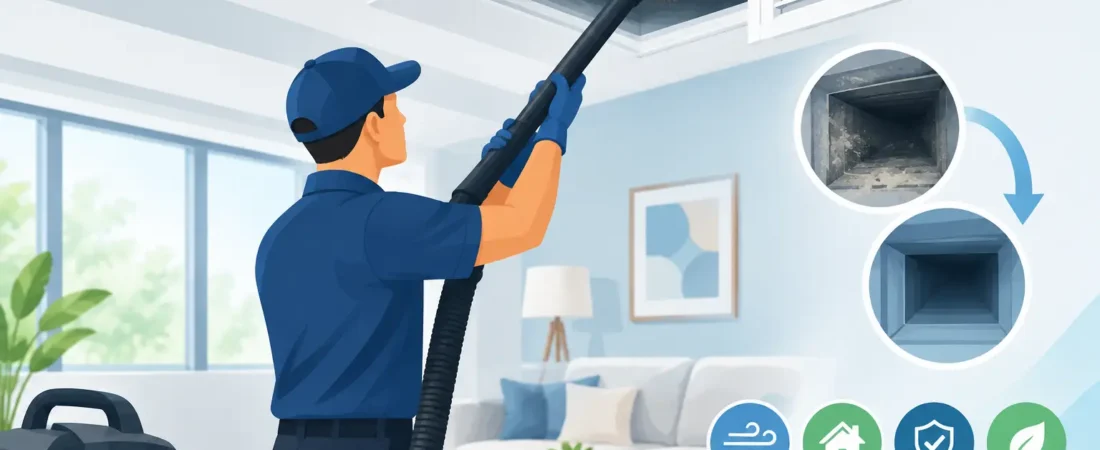
A dusty vent cover is easy to spot. What is harder to see is the buildup that can collect inside the ductwork after a remodeling project, a pest issue, years of pet hair, or a long stretch of heavy furnace use. Air duct cleaning is not something every property needs on a fixed annual schedule. But in the right situation, it is a practical part of getting a home, rental, or small business clean and ready to use.
For property owners in Ypsilanti, Ann Arbor, and surrounding southeast Michigan communities, the best time to schedule this service usually comes down to what has happened in the property, how the HVAC system is performing, and what you can see around the vents. A clear inspection and defined scope matter more than a vague promise to “freshen the air.”
What Air Duct Cleaning Actually Includes
A proper duct cleaning appointment focuses on the supply and return ductwork connected to your heating and cooling system. The technician accesses the system, uses specialized equipment to loosen and collect dust and debris, and cleans reachable sections of the ducts, vents, and registers. The goal is to remove accumulated material without spreading it through the home.
The exact scope depends on the property. A single-family home with one furnace is different from a commercial suite, a duplex, or a house with multiple HVAC zones. Older homes may have duct layouts that limit access. Some systems need attention at the registers and main trunk lines, while others have buildup near the return vents, blower area, or filter compartment.
A written estimate should explain what is included before work begins. Ask whether the scope covers supply vents, return vents, accessible duct runs, registers, and cleanup. If the technician identifies a separate issue, such as damaged ductwork, mold-like growth, insulation problems, or a mechanical concern, you should know about it before approving added work.
When Air Duct Cleaning Makes Sense
There is no reliable reason to clean ducts simply because a calendar says it has been a certain number of years. The stronger reasons are specific conditions that put dust, debris, or contaminants into the system.
Air duct cleaning is often worth considering after a renovation. Drywall dust, sawdust, paint particles, and other construction debris can travel farther than expected, especially if the HVAC system ran during the project. Even careful contractors cannot always keep every return vent fully protected during a large repair or remodel.
It can also be useful after a pest problem. Rodents or insects can leave nesting material, droppings, and odors in or near ductwork. Cleaning the ducts is not a substitute for pest control or sealing entry points, but it can be an appropriate follow-up once the source of the problem has been addressed.
Homes with several shedding pets may accumulate visible hair and dust around registers more quickly. The same can be true for properties near active construction, busy roads, or areas where doors are frequently opened for deliveries, tenants, or customers. In these cases, better filtration and regular housekeeping still matter, but cleaning may help reset the system after a period of heavy buildup.
Other signs deserve a closer look: dust blowing from vents when the system starts, visible debris inside accessible registers, a persistent stale smell with no obvious source, or excessive dust returning soon after routine cleaning. These signs do not automatically prove the ducts are the cause. They do, however, give you a reasonable basis to request an inspection and estimate.
When Duct Cleaning May Not Solve the Problem
Duct cleaning has limits. If rooms are unevenly heated or cooled, the issue may be a blocked register, undersized ductwork, a failing blower, a thermostat problem, or poor insulation. Cleaning alone will not correct those mechanical or design issues.
Likewise, frequent dust can come from leaky windows, worn weatherstripping, carpeting, pets, outdoor pollen, or an HVAC filter that is too thin for the system and household. Before scheduling service, check whether the filter is installed correctly and changed on schedule. A clogged or poorly fitted filter can allow more debris to circulate and can make the system work harder.
If you are concerned about mold, do not rely on a generic cleaning claim. Moisture is the root issue. A contractor should identify whether there is an active leak, drainage problem, condensation issue, or humidity concern before recommending cleaning. Removing visible material without addressing moisture can leave you back in the same position later.
A Practical Time to Schedule Service
For many Michigan properties, duct cleaning fits naturally into a larger reset of the home. Before moving into a rental or newly purchased house, it can be scheduled alongside deep cleaning, carpet cleaning, painting, and minor repairs. That approach is often more efficient than bringing in separate providers weeks apart.
Landlords and property managers may also choose service between tenants when there is evidence of heavy dust, pet hair, smoking odors, or renovation debris. The condition of the property should guide the decision. A well-maintained unit with clean vents and a properly serviced HVAC system may not need a full duct cleaning at every turnover.
Small-business operators may consider it after a build-out, after dust-producing work, or when preparing a space for reopening. Offices, retail spaces, and other commercial properties often have different operating hours and access needs, so the work should be planned around staff, customers, and building rules.
How to Prepare for an Appointment
A little preparation helps the work go smoothly. Clear a path to the furnace or air handler, move fragile items away from floor and wall vents, and let the crew know about pets, access instructions, or areas that need special care. If a vent is behind a heavy piece of furniture, discuss it during the estimate rather than assuming it can be reached on service day.
It also helps to gather the property history. Let the provider know whether there was recent construction, water damage, pest activity, a previous HVAC repair, or an odor concern. Those details help define the scope and may reveal that another service should come first.
After the appointment, keep the system in good shape with routine filter changes, clean registers, and HVAC maintenance. A clean duct system will not stay clean if the filter is neglected or if duct connections are loose and pulling dusty air from attics, basements, or crawl spaces.
Choose a Clear Scope, Not a Vague Offer
Be cautious with unusually low advertised prices that do not state how many vents, returns, systems, or accessible duct runs are included. Those offers can lead to pressure for add-ons once the crew is in the home. A dependable provider explains the starting price, asks enough questions to understand the property, and gives you a chance to approve the plan before work starts.
For a home, rental, or local business, one accountable team can make coordinating related work simpler. Sahel Home Services can pair air duct cleaning with HVAC diagnostics, carpet cleaning, deep cleaning, repairs, or painting when the property needs more than one service. The value is not unnecessary work. It is a clear plan, a defined scope, and fewer calls for you to manage.
If you can see debris at the vents, recently completed dusty work, or are preparing a property for its next occupant, start with an honest assessment of the system. The right service at the right time is a better investment than cleaning on autopilot.